The Pink House: My Filipino family’s first home in America
An immigrant family’s beginning through summer, fall, winter and spring
Also published on my Substack
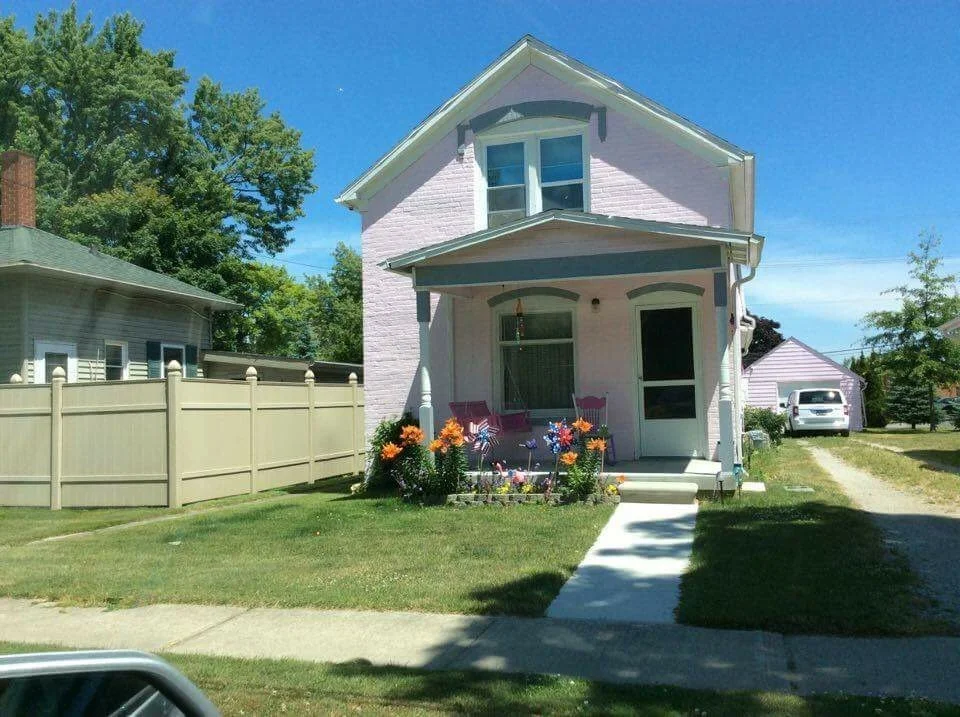
Everyone in town knew the pink house.
You didn’t need an address. If you said it out loud, the pink house, people nodded. It sat in Harbor Beach, Michigan, at the tip of the thumb.
That was our first home in America.
At first it was just my mom, my brother, and me. My dad stayed back to tie up some loose ends in the Philippines.
I remember the first night. All of us on one bed. A Super Nintendo beside the TV.
I remember feeling aimless and lonely. Maybe I picked that up from my mom. The pink house was not yet a home.
Summer moved slowly.
One afternoon my mom cut the front lawn with scissors. We had a push mower. It sat untouched that day. She told me she used to cut grass that way in the Philippines. She sat on a chair cushion, trimming the lawn in slow arcs. People passed by wondering what she was doing.
I didn’t question it. Looking back, maybe it was a way to touch home without leaving. I don’t think she ever finished.
Fall arrived with chestnuts.
A massive tree stood in front of the house. Green spiked shells dropped everywhere. We didn’t know what they were. We didn’t know if they were edible. We filled paper bags anyway. I tried opening them by stomping on them. Sometimes a smooth brown bulb popped out. Sometimes it was pale, the color of a manila folder.
We never figured out what to do with them. They covered the sidewalk, rolling underfoot, so my walk was careful and uneven.
That fall I had a school assignment to collect leaves. I found a ginkgo leaf shaped like a luna moth. I loved it immediately. I ironed it between wax paper, convinced it would last forever. My mom walked with me as we searched for more. That assignment felt important. Like proof we belonged.
Winter turned the house into something unreal.
The ductwork was bad, but I didn’t know that yet. All I saw were icicles. They lined the side of the house, thick and towering, stretching from the roof to the ground. Hundreds of them. Some too big to break.
Every morning I tried anyway. I kicked them, hoping for an avalanche. Sometimes one came loose and I claimed it as a spear, throwing it into the backyard.
We drove a red Jeep Cherokee. I remember climbing into it while it was still dark. My parents brushed snow off the car in silence. Harbor Beach barely moved at that hour.
Spring belonged to my mom.
She fell in love with tulips. Red. Pink. Orange. She planted them out front and I wondered where they went in winter. How they stayed alive underground. How they knew when to return.
She learned about hostas. About American gardening. She bought wooden pinwheels shaped like flowers. When the wind came through, the petals spun. I watched them endlessly. When the air went still, I felt sad. So I pulled one from the ground and ran with it, forcing it to spin.
Ma put dandelions in a vase.
She liked the yellow. The brightness. She liked how they turned into soft white puffs. I imagine her scanning the yard, deciding what deserved to come inside. She didn’t want to cut the tulips, so she chose dandelions. Our yard was full of them. We didn’t know they were weeds. We thought they were beautiful.
At a housewarming party, another Filipino laughed and warned her about the white puffs taking over the house. My mom laughed with them and stopped bringing them inside.
We didn’t understand what Americans decided had to be controlled. Everything still felt open. Wild.
I thought those moments were just strange details. Now I see them as signs of life.
My mom was teaching herself how to live here without erasing who she was. I was learning that belonging doesn’t arrive all at once. It shows up slowly, in habits, in misunderstandings, in things you love before you’re told not to.
I don’t live there anymore. The house isn’t the same pink now. Someone may have fixed the ductwork. Someone definitely pulled the dandelions.
But that house still exists in me. In how I notice small things. In how I hold onto what feels familiar, even when it looks wrong to others. In how I know that the first version of home is never polished.
It’s cut unevenly.
It’s unfinished.
And it’s enough.